

What happened
On 28 September 2026, BBC Panorama broadcast Ghost Plates: Drivers Cheating the Law, putting a national spotlight on an enforcement problem that has been growing quietly for years. The following day, Auto Express reported on the technology being deployed to tackle it.
ANPR technology firm MAV Systems has begun test deployment of new cameras that can detect ghost plates. These are plates that look perfectly normal to the naked eye but are treated with reflective sprays, translucent films, or modified fonts that make them unreadable under the infrared light standard ANPR cameras rely on. They are designed to let a vehicle move around undetected by enforcement systems.
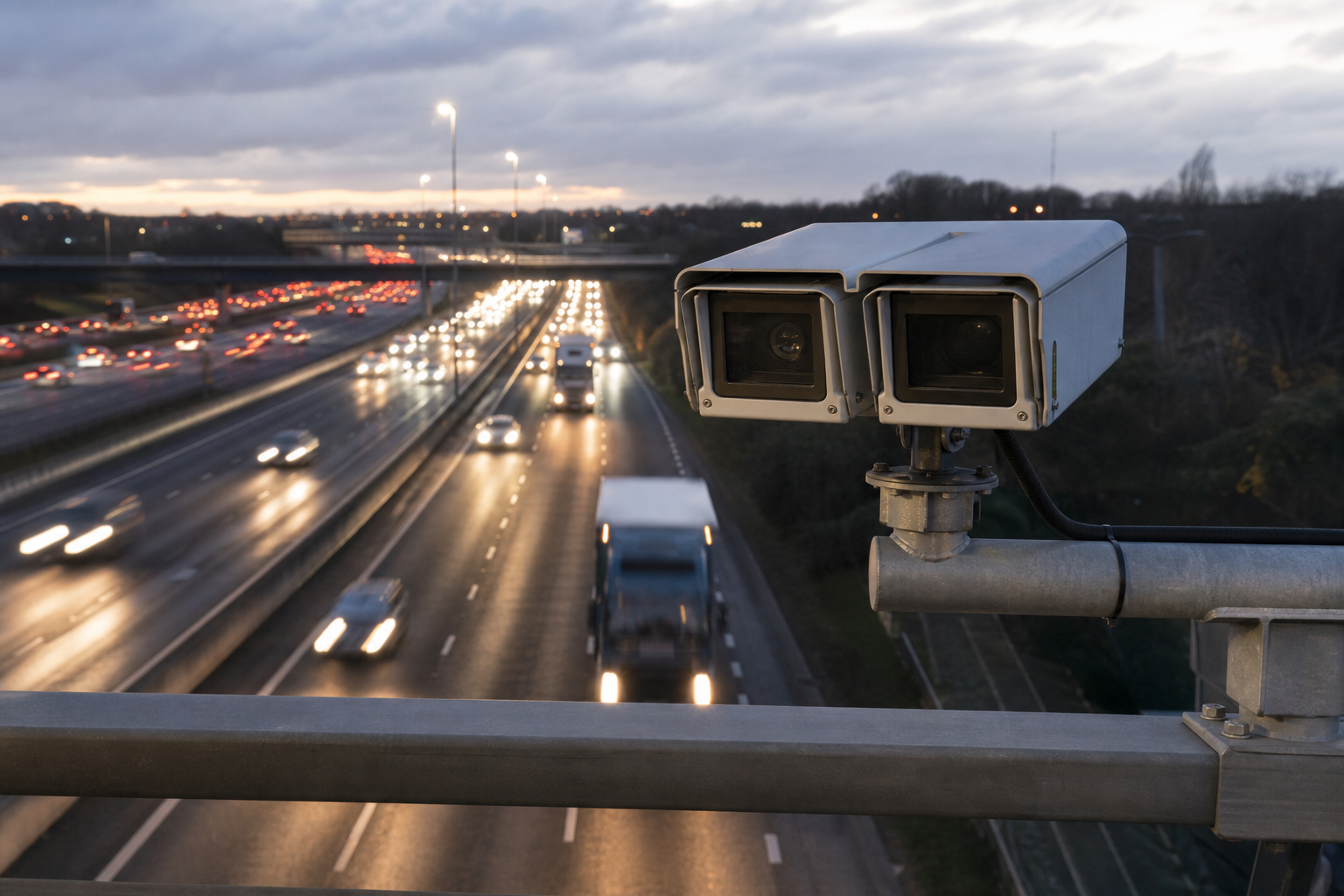
The MAV Systems cameras combine high-definition video with dual lenses, one infrared and one colour, driven by AI algorithms that identify anomalies traditional systems miss. Test sites are currently operating in south-east England, near the Dartford Crossing, the M25 corridor, and the Eurotunnel terminal at Folkestone.
The numbers coming back are significant. According to Auto Express, one camera near the Dartford Crossing identified more than 1,000 ghost plates in a single day. A site near the M25 has gone from around 1,000 daily detections to nearly 2,000 over almost two years of running. The Folkestone site flags more than 400 a day.
Those figures cover a handful of sites in one part of the country. The UK’s ANPR network already runs to around 14,000 cameras capturing 100 million plate reads every day. The ghost plate problem has been operating inside that system largely undetected until now.
The scale of non-compliance is hard to pin down precisely. The All-Party Parliamentary Group on Transport Safety published its Ghosts on the Road report in December 2025, estimating that up to one in 15 vehicles on UK roads may carry modified or non-compliant plates. That is an estimate drawn from available enforcement data, not a measured census of every road in Britain. Treat it as indicative rather than definitive.
The law is not complicated. Under the Road Vehicles (Display of Registration Marks) Regulations 2001, every vehicle on a public road in Great Britain must carry fully legible plates in the standard Charles Wright 2001 font. Regulation 11 is explicit: no reflex-reflecting material may be applied to a plate, and the plate must not be treated in any way that causes the characters to become retroreflective. Fitting a ghost plate and driving on the public road is illegal. Buying one is not, in itself, an offence, but that distinction disappears the moment it goes on the car.
Current penalties sit at a £100 Fixed Penalty Notice on the spot, rising to a potential £1,000 fine if the case goes to court under Section 42 of the Vehicle Excise and Registration Act 1994. There are no penalty points for plate offences yet. If a driver deliberately uses ghost plates to evade speed cameras, bus lane enforcement, or toll charges, police can charge them with attempting to pervert the course of justice, which carries potential custodial sentences.
MOT is worth flagging. A vehicle will fail its MOT for incorrectly displayed plates, but a ghost plate looks indistinguishable from a legal one to the naked eye. A tester may not catch it. An MOT pass is not confirmation that a plate is road-legal.
Analysis: why it matters
This is a meaningful shift in enforcement capability. The detection volumes at a small number of test sites suggest ghost plates are far more widespread than existing enforcement had revealed. The cameras are not yet everywhere, but the technology is proven and the political attention is real. Panorama coverage and a government announcement in early September 2026 mean this is not going away.
For most modified car owners, ghost plates are not something they run. But the wider enforcement infrastructure being built around this issue will catch legal builds and illegal ones alike. If you are running anything close to the line on plates, now is the time to make sure you are on the right side of it.
That includes 3D and 4D plates. The APPGTS December 2025 report recommended banning both types because they create problems for camera detection. As of writing, that recommendation is not law, but it is on the table. If you are running 4D characters, keep an eye on this.
Ghost plates are being used to dodge ULEZ charges, congestion zone fees, toll roads, and speed cameras. That puts the modified community in an awkward position. Anyone on ghost plates shares motorway space with your car and creates the enforcement pressure that leads to blanket crackdowns. If police are pulling vehicles over for plate checks in greater numbers, legal builds get caught in those stops too.
Chief Constable Tim Forber, the UK’s policing lead on ANPR, has stated that not a week goes by without ghost plates turning up in serious and organised crime cases. That is the company your plates will be keeping in enforcement intelligence if they are non-compliant, regardless of why you fitted them.
What is still unclear
Several things need watching closely before treating them as settled.
The Department for Transport has consulted on introducing up to six penalty points for deliberate plate non-compliance, alongside powers to impound vehicles fitted with ghost plates on the spot. Those proposals are not yet enacted. The Vehicle Registration Offences (Review) Bill has been introduced, but its Parliamentary status should be confirmed before treating any of this as a done deal.
The MAV Systems detection data comes from south-east England only. There is no comparable evidence yet for Scotland, Wales, or Northern Ireland. The one-in-15 estimate from the APPGTS report is a national extrapolation, not a measured figure from every region.
A 3D and 4D plate ban is recommended by the APPGTS, not enacted. Do not treat the recommendation as a rule change.
The London Assembly has questioned revenue loss from ghost plates, but independently verified TfL enforcement figures have not been confirmed at the time of writing.
What to watch next
Check the Parliamentary progress of the Vehicle Registration Offences (Review) Bill. If it passes with six-point penalties and vehicle seizure provisions, the risk profile for any non-compliant plate changes overnight.
Watch for expansion of the MAV Systems trial beyond the south-east. Once the cameras move to motorways across the country, detection volumes will rise sharply and enforcement actions with them.
If you are buying plates from any of the 34,000-plus businesses registered with the DVLA to supply them, check they are issuing plates that fully comply with the 2001 Regulations. According to Panorama, only two of those businesses have been prosecuted and removed from the register since 2020. The supply chain is largely unpoliced. That is the seller’s problem legally, but it becomes yours the moment you fit the plate and drive.